
At noon on November 3 in Shinbashi, Minato Ward, Tokyo, Japan. On the legal holiday “Culture Day,” Japanese people out for outings held large takeout coffee cups in their hands. The beverages were from the South Korean low-cost coffee franchise “Paik’s Coffee.” The store was bustling with people who had finished lunch nearby and were looking to buy coffee as a dessert.
Hanada, female, 29 years old, an office worker met that day, said, “I came here on purpose because I heard that the large iced Americano I drank during my trip to South Korea is now available in Japan,” and added, “It’s much cheaper and larger in quantity than Japanese cafes, making it easy to enjoy without any burden.” The price of the approximately 700ml iced Americano she drank was 250 Japanese yen (approximately 2,100 Korean won), less than half the price of a nearby local brand cafe.
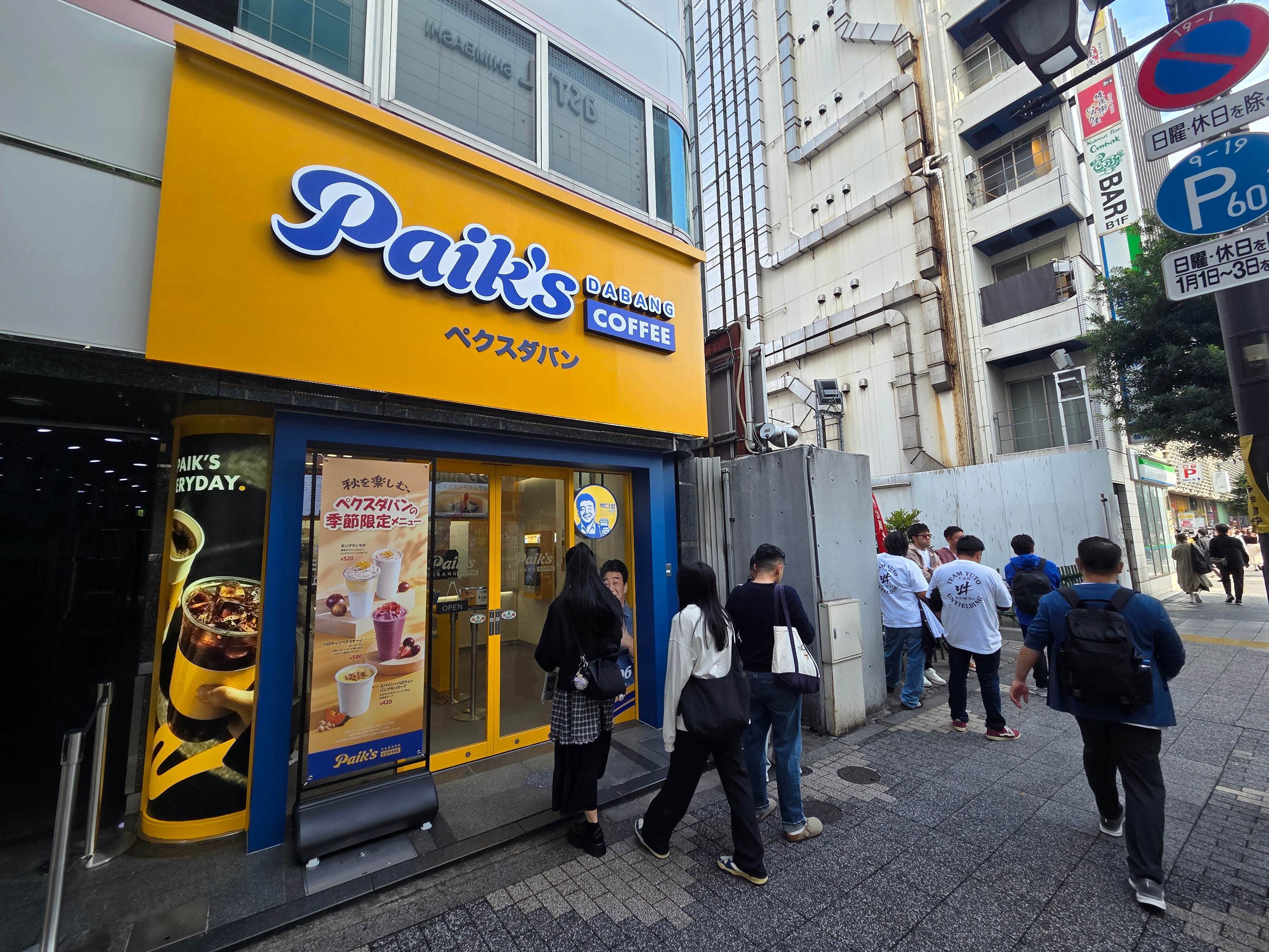
Recently, South Korean-style “large-volume low-cost coffee” specialty shops have been successively entering downtown Tokyo, creating a boom. Paik’s Coffee Shinbashi, which opened in August, has become a big hit among nearby office workers, gaining word-of-mouth fame as “cost-effective” and selling over 1,000 cups per day on average. Other South Korean franchises such as “Mass Coffee” and “Mammoth Coffee” have also successively entered areas like Gotanda, Kanda, and Yurakucho, making the sight of Japanese people holding “takeout iced coffee,” which was rare in Tokyo until now, a common everyday scene.
Japanese people mainly visit cafes to converse or read books in a quiet atmosphere. They prefer hot coffee over cold beverages, and since there are few trash cans on the streets and at train stations, it is rare to see people drinking coffee while walking on the street. Local food culture expert Enomoto Yasutaka pointed out the difference, saying, “While Japan has a culture of slowly savoring drip coffee with deep, strong bitter flavors, South Korea has a way of drinking refreshing coffee as if replenishing moisture after meals or during commutes.”
Local media also noted that it is unusual for South Korean takeout-only coffee shops without seating to be popular in downtown Tokyo, where many cafe chains like Starbucks, Doutor, and Excelsior are already densely located.
The key to success is first and foremost overwhelming “cost-effectiveness.” While local low-cost cafes have recently raised prices one after another due to rising costs of raw materials like coffee beans and labor, South Korean chains have secured price competitiveness beyond convenience store coffee by selling “1L coffee,” which is hard to hold with one hand, for just 400 Japanese yen (approximately 3,400 Korean won). Enomoto analyzed, “Although Japan has around 100 Japanese yen coffee available at convenience stores or McDonald’s, they have tapped into the demand of office workers who want to place large-volume coffee on their desks and work.”
There is an observation that they have targeted the demand of Japanese people who want to enjoy coffee at affordable prices by accepting orders via kiosks rather than staff in a space of about 10 pyeong (approximately 33 square meters), saving on rent and labor costs. A source from Paik’s Coffee said, “Since Japan is a market with relatively high store operating costs, we believed it was important to build an efficient operating system in a limited space to provide consistent quality and service,” and added, “We minimized waiting time from order to pickup and even created a dedicated application for Japan.”
Additionally, the uniqueness of being “South Korea-originated” has acted as an attraction for the younger generation. Local media such as Interbell reported, “Following fashion and cosmetics, coffee has emerged as a new South Korean cultural trend,” and added, “It has become popular to take certification photos on social media holding large takeout coffee cups like people in South Korean dramas or movies.”
Seemingly aware of the popularity of South Korea-originated coffee, Japanese companies have also successively launched large-volume coffee. The famous franchise “Pronto” recently introduced a “Giga Size (approximately 900ml),” which is 2.5 times the regular size, and convenience stores like FamilyMart and Lawson have also newly introduced takeout large-volume coffee. South Korean coffee brands plan to expand their stores beyond Tokyo to the entire Japan.
However, experts observed that the “test” for South Korean-style large-volume low-cost coffee will be the upcoming winter. Enomoto said, “Japan does not have the so-called ‘freezing to death but still drinking iced Americano’ culture, and people naturally look for hot coffee in winter,” and added, “How South Korean cafes, whose strength lies in large-volume iced coffee, will overcome the winter demand in Japan will be the key to growth.”
Post a Comment